Lahar deposit
Lahar deposits are classified as sedimentary rocks, but their origin is associated with volcanic activity. Lahar, a word of Indonesian origin, describes water-saturated masses of volcanic ash and boulders that flows down the slope of the volcano into a valley. Lahars are even more dangerous than the eruptions. The width of the lahar flow may reach several hundreds of meters and their speed may exceed 200 km/h. A lahar can be triggered by melting of snow on the volcano, heavy rains and/or seismicity accompanying volcanic eruptions.
A typical lahar deposit can be recognized as a chaotic accumulation of variably large and usually rounded boulders of volcanic rocks enclosed in solidified groundmass (originally mud). Occasionally, fossil wood or tree-leaf imprints are found in lahar deposits as remnants of ancient trees swept down by the lahar.
Lahar deposits are rather common in the Doupovské hory Mts., with Skalky skřítků (Dwarf´s rocks) natural monument as one of the most beautiful examples. On this site, ancient volcanigenic debris flow buried tree-trunks. The tree-trunks rotted away over time leaving only holes and tunnels resembling dwarf caves.
Sample donated by the Farm Bor ZEOS, Ltd.
Rock type
Locality
Age
Parkování Goethova vyhlídka
Zaparkovat můžete na přírodním parkovišti (16 míst) vzdáleném cca 300 m od vyhlídky. Dále na určených zpevněných plochách podél cest, kromě křižovatek, výhyben, odboček (nutné ponechat průjezd pro hasiče, záchranáře a kamiony se dřevem).
Parkovacích míst v letní sezóně většinou není dostatek. Doporučujeme využít autobusovou dopravu. Nejkratší možností přístupu je vyjít ze zastávky autobusů MHD č. 8 Hůrky asi 1,2 kilometru vzhůru Gogolovou stezkou.
Kavárna a rozhledna
- Pá
- 11:00 – 17:00
- So - Ne
- 10:00 – 17:00
Vstup na rozhlednu je možný pouze za příznivého počasí.
V případě dotazů nás prosím kontaktujte
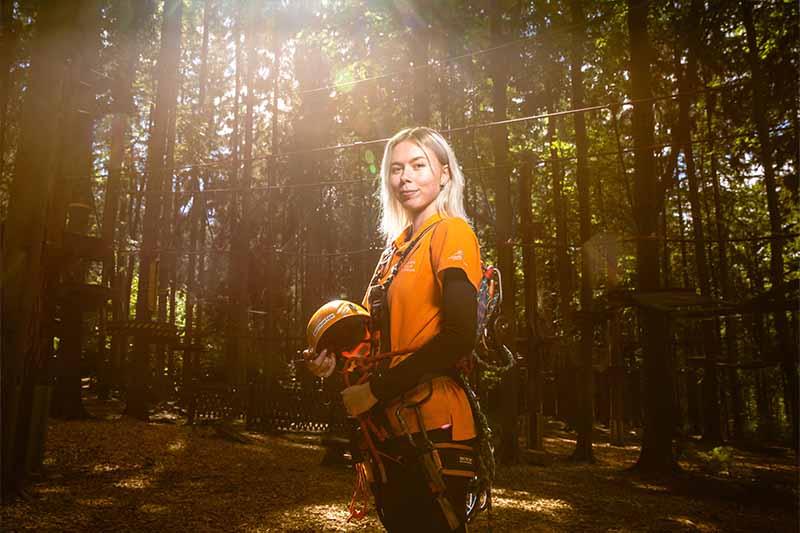
Adéla Jírová
Vedoucí kaváren a volnočasových aktivit, lesní pedagogika